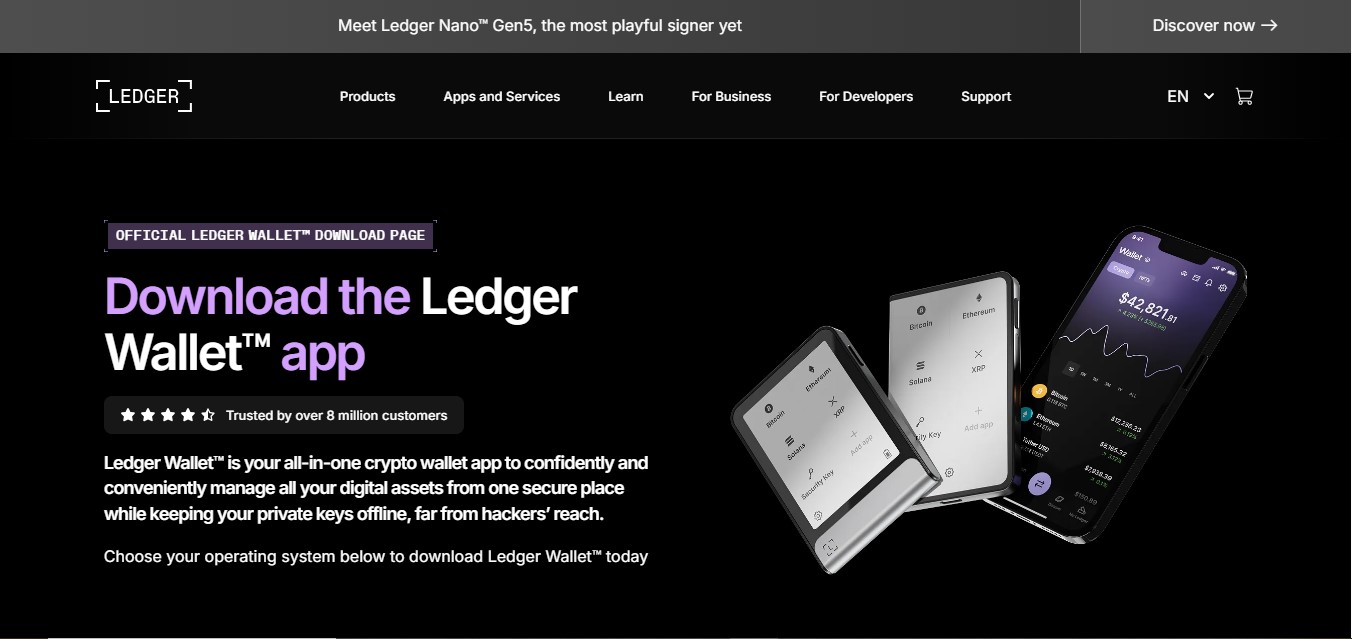
Ledger® Live: Login | Secure Access to Your Wallet
Ledger® Live is the official companion application for Ledger hardware wallets, designed to give users a secure, intuitive, and all-in-one interface for managing digital assets. From checking balances and sending or receiving crypto to staking, swapping, and tracking portfolios, Ledger Live acts as the control center for your self-custodied funds. At the heart of this experience is the Ledger Live login process, which prioritizes security without sacrificing usability. This guide explains how Ledger Live login works, why it’s secure, and how to use it safely across desktop and mobile platforms.
What Is Ledger Live?
Ledger Live is a free application developed by Ledger to work with Ledger Nano X, Nano S Plus, and other supported Ledger devices. Unlike online wallets or exchange accounts that rely on usernames and passwords, Ledger Live uses hardware-based authentication. Your private keys never leave your Ledger device, and Ledger Live simply provides a secure interface to interact with the blockchain.
Ledger Live is available on:
Desktop (Windows, macOS, Linux)
Mobile (iOS and Android)
Understanding Ledger Live Login
The term “login” in Ledger Live differs from traditional logins used by exchanges or web wallets. There is no email address, username, or cloud password required to access your wallet. Instead, access is controlled through:
Your Ledger hardware wallet
A PIN code on the device
Optional app-level security, such as a password or biometric lock
This design removes many common attack vectors like phishing, credential leaks, or password reuse.
How Ledger Live Login Works (Desktop)
When you open Ledger Live on your computer, you are not logging into an online account. You are opening a local application that connects to your Ledger device.
Step-by-step overview:
Launch the Ledger Live desktop app.
Connect your Ledger device via USB.
Enter your PIN directly on the Ledger device.
Open the required crypto app (e.g., Bitcoin, Ethereum) on the device.
Ledger Live syncs account data and displays balances.
If you have set an application password in Ledger Live settings, you will be prompted to enter it before accessing the app interface. This password protects the app locally and does not replace the device PIN.
Ledger Live Login on Mobile
On mobile devices, Ledger Live offers a smooth and secure login experience, especially when paired with the Ledger Nano X via Bluetooth.
Mobile login features include:
Optional biometric authentication (fingerprint or Face ID)
App password or PIN protection
Bluetooth connection to Ledger Nano X
Secure pairing that does not expose private keys
Once unlocked, Ledger Live shows portfolio data while still requiring the hardware wallet to approve any transaction.
Why Ledger Live Login Is Secure
Ledger Live’s login model is built on self-custody and hardware isolation, which offers significant advantages over traditional software wallets.
Key security benefits:
No centralized account: There is nothing for hackers to “log into” remotely.
Private keys stay offline: Keys are generated and stored inside the Ledger Secure Element chip.
Physical confirmation required: Transactions must be approved on the device screen.
Phishing resistance: Even if Ledger Live is installed on a compromised computer, transactions cannot be signed without the device.
This architecture ensures that control always remains with the user.
App Password vs Device PIN
It’s important to understand the difference between the two layers of security:
Ledger device PIN
Entered on the hardware wallet
Required to unlock the device
Protects private keys
Ledger Live app password
Entered on desktop or mobile
Protects local app access and portfolio visibility
Optional but strongly recommended
Using both together provides layered protection against unauthorized access.
Common Ledger Live Login Issues and Fixes
While Ledger Live is designed to be user-friendly, occasional issues may arise.
1. Ledger Live won’t detect the device
Ensure the USB cable is data-enabled
Try a different USB port
Make sure Ledger Live is up to date
Unlock the device and open the correct crypto app
2. Forgot Ledger Live app password
The app password cannot be recovered
You can reset Ledger Live and re-add accounts using your device
Funds remain safe on the blockchain
3. Entered wrong PIN too many times
Ledger devices reset after multiple incorrect PIN attempts
Restore access using your 24-word recovery phrase
Best Practices for Safe Ledger Live Login
To maintain maximum security when using Ledger Live:
Only download Ledger Live from the official Ledger website
Never share your 24-word recovery phrase
Do not enter your recovery phrase into Ledger Live or any website
Enable app password or biometric lock
Keep your device firmware and Ledger Live app updated
Always verify transaction details on the Ledger device screen
Ledger Live Login vs Exchange Logins
Unlike exchanges that require emails, passwords, and two-factor authentication, Ledger Live removes reliance on centralized credentials. This means:
No account lockouts
No password resets
No exposure to exchange hacks
Full ownership of assets
Ledger Live is ideal for users who value sovereignty, privacy, and long-term security.
Who Should Use Ledger Live?
Ledger Live is suitable for:
Beginners looking for a secure introduction to self-custody
Long-term holders (HODLers)
Active users managing multiple assets
DeFi and staking participants who want hardware-level security
Whether you hold Bitcoin, Ethereum, or hundreds of supported assets, Ledger Live provides a consistent and protected login experience.
Conclusion
The Ledger® Live login system redefines what “secure access” means in the crypto world. By eliminating traditional usernames and passwords and replacing them with hardware-based authentication, Ledger Live ensures that only you can access and control your digital assets. Every login is backed by physical confirmation, offline key storage, and optional app-level protections.
If you’re serious about crypto security and self-custody, Ledger Live offers a login experience that is not only secure, but also transparent, reliable, and built for the future of digital finance.